‘The finest literary fiction being written is not American or British but rooted in Canada and speaking to the world’

Article content
Excerpted from David Staines’ keynote address to Universität Trier marking 50 years of Canadian studies at the German university, where he was awarded an honorary degree in May. Staines’ lecture was titled, Fifty Years on: Canadian Fiction Then and Now
In 1976 I was putting the finishing touches on my first book, The Canadian Imagination: Dimensions of a Literary Culture. My favourite cousin, a PhD in the sciences, dropped by and examined what I was writing. I told him what I was doing, and he looked at me with disgust. “Whenever I go into the library and see a maple leaf on the side of a book, that means I avoid it because it is Canadian,” he remarked. His observation was indicative of the times when Canadian fiction was not a dominant piece of our country’s fiction.
Advertisement 2

Article content
When I moved to the University of Ottawa as a medievalist in 1978, a senior colleague, himself a Canadian, scolded me at our first departmental meeting, “I did not know you were a member of the Maple Leaf mafia.” I did not know how to respond. I kept silent.

Long Story
Article content
In the winter of 1982 — on my first lecture trip to Sweden — I happened to meet Per Gedin, the owner and publisher of Wahlstrom and Widstand, Sweden’s major publisher of major fiction, Swedish fiction and English fiction that had been translated into Swedish. Their authors include Kasuo Ishiguro, Gabriel García Marquez, José Saramago, and Jeanette Winterson. Gedin became the owner and publisher of this fabled company in 1961, a position he held for 25 years, until he became director for 12 years of Gedin publications.
I still remember our dinner conversation, he, an astute judge of the literary scene, I, a young and naïve listener. He informed me that his agents always used to fan out to New York or London to know what was happening there, he said. Those days are in the past. Now he sent his people to Australia, South Africa, and Canada. When I asked him why, he explained. Australia had come alive in a literary sense because Patrick White had won the Nobel Prize; now Australia and its literature were being “discovered.” South Africa had the horrid stranglehold of apartheid, which led to such preeminent writers as Nadine Gordimer speaking out. And then he reflected on Canada, which had not won any major international awards, had no history of intense warfare or major breakups inside the country, and might well be accomplishing incredible literary feats, which would escape the notice of the world outside of Canada. Canada, therefore, had no defining interest to the outside world. It was a safe place for fiction to grow and develop without the steady gaze of the outside world.
Advertisement 3
Article content

And what has been happening since our conversation that evening 45 years ago? Margaret Atwood has won the Booker Prize twice, once for The Blind Assassin in 2000 and once for The Testaments in 2019, in addition to being a finalist on three other occasions. Alice Munro won the Nobel Prize in 2013 for the body of her fiction; her book, The Beggar Maid, was shortlisted for the Booker in 1979, and afterwards the authorities for the Booker decreed that the award henceforth was only open to submissions of novels. And Michael Ondaatje won the Golden Man Booker Prize for The English Patient as the best of the first 51 Booker Prize winners.
Canada has not suffered the ravages of external wars or internal devastations. We have had steady calls for separation from Quebec and then from Alberta. We have the ongoing struggles to find accommodation with the First Nations, though these take place primarily at negotiation tables. There is no sense of brutal wars raging within the country.
So, why, then, is Canada’s story, the story of a remarkable rise in the growth of fiction, so little known both outside the country and, alas, within the country? I would like to point out the immense wealth that is our fiction, the amazing quality of this fiction, and then posit some of the negative forces undercutting this amazing tale.
Advertisement 4
Article content
Early Indigenous fiction
The realm of Indigenous fiction came to a sudden halt with Pauline Johnson’s effective short stories about the need for Native-White coexistence and harmony. In “A Red Girl’s Reasoning” (1893), a Native woman reveals to a society hostess that her parents were married in a traditional Native rather than a Christian ceremony. When her husband later accuses her of publicly humiliating him, she wonders to him, “Why should I be ashamed of the rites of my people any more than you should be ashamed of the customs of yours — of a marriage more sacred and holy than half of your white man’s mockeries?” That evening, she leaves her marriage and her home. After months of searching for her, he finds her working at embroidery. Contrite, he wants her to return to their marriage. She cannot, telling him, “I have no love for you now. You forfeited me and my heart months ago.”

Johnson’s optimistic outlook on Native peoples and their interchanges with Euro-Canadians fell on deaf ears. Her death in 1913 coincided with the appointment of Duncan Campbell Scott as the head of Indian Affairs. Scott was an advocate for the assimilation of Canada’s Indigenous populations. And after Johnson’s passing, 60 years would go by before any Indigenous writer would again be published in Canada. And that breakthrough came with Maria Campbell’s Halfbreed in 1973. And since that time, there have been many Indigenous fiction writers who have followed Johnson’s lead, now surveying their own landscapes.
Advertisement 5
Article content
One of the best is the late Richard Wagamese (1955-2017). In his novel Medicine Walk (2015), an Ojibway teenager is summoned by his estranged and sadly declining father to conduct him into the British Columbian interior where he wants to be buried in the way of his ancestors, sitting up, facing east, “in the warrior way.” For the son, this final journey leads to an acceptance, if not forgiveness, of his father.
Wagamese writes with deep compassion of the trials and the sufferings of the Ojibway people, reaching out to the love that ultimately connects them and highlighting the healing power of family, of tradition, and of the landscape that engulfs them. The land is salvation for its people. His books capture the Ojibway mind in scenes that speak to the Ojibway and to all peoples who find themselves reflected on its pages.
A more recent writer is the Métis poet, Katherena Vermette, whose first novel, The Break (2016), became a national bestseller. An intergenerational saga about life in Winnipeg’s North End, it features 10 people offering their perspectives on a scene of rape, trying to make some sense of the tragic event and of their own lives. Her first three novels form a trilogy. And in her fourth novel, Real Ones (2024), two sisters confront the fact that their mother is called out for false claims to Indigenous identity. This fact becomes the source of their anxiety and their fraught conclusions.
Advertisement 6
Article content
Article content

Their Métis heritage has been passed down paternally; their mother, who produces art, is white. The novel catalogues the fallout and media storm surrounding the mother after she is exposed as a false Indigenous. The daughters explore their right to the label Métis: what it means to them in a white world that looks at them differently and what the term means more generally for an entire people.
Vermette seems to be saying that — with the public exposure of the pretend Indigenous person — the pain it causes people closest to them is the hurt that happens behind closed doors. Writing within her closely defined Indigenous world, in her afterword Vermette names her host of authors, all Indigenous and all from the last 50 years, for her heartbreaking tale, and she is writing to Indigenous and non-Indigenous readers, mapping out her own territory as part of a continuum with earlier works in her fiction world.
Recent rise of mainstream fiction
While Indigenous fiction is a recent dimension of Canadian fiction, the more mainstream dimension, that of the white Canadian world, is also comparatively recent. After all, Morley Callaghan would not name his settings in his short stories and novels until 1948. Mordecai Richler set his first novel, The Acrobats (1954), in Europe. Yet Margaret Laurence maintained in 1972: “We still had for many, many years a kind of colonial mentality, a great many people felt that a book written by a Canadian couldn’t possibly be good … This whole cultural climate has changed incredibly, and particularly in the last decade … Very few Canadian writers of any seriousness or worth do not find readership in their own country.” And the time between Richler’s early fiction and 1972, the period of the ’60s, saw the first fictional endeavours of, among others, Margaret Atwood, Timothy Findley, Robert Kroetsch, Margaret Laurence, and Alice Munro.
Advertisement 7
Article content
Article content
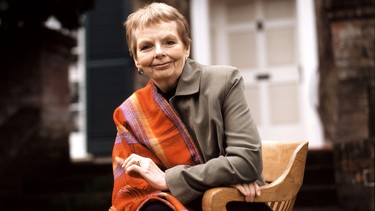
In 1976, the year Canadian Studies began at Trier (University), Atwood published her third novel, Lady Oracle. And in the following decade, countless authors were basing their writings on their indebtedness to Atwood or to Alice Munro. You can hear Alice Munro on the pages of Fugitive Pieces (1992), Anne Michaels’ first novel, which recounts the travails of a Holocaust survivor who emigrated to Canada and later published several volumes of poetry based on his own experiences. The novel won the Orange Prize in 1997 and has been translated into more than 20 languages.
Then, in 2016, Madeleine Thien published her remarkable novel, Do Not Say We Have Nothing, a Booker finalist, which has been translated into more than 25 languages. It depicts the long periods of Chinese unrest from Mao Zedong’s revolutionary army’s first battles through the Cultural Revolution to the Tienanmen Square massacres to life in contemporary China. Mixing real-life events with her fictional and totally believable characters, she captures brilliantly the recent decades of Chinese history and their terrifying effects on the many people who populate the novel’s pages.
Born in Vancouver to a Chinese mother and a Malaysian father, Thien openly acknowledges Alice Munro as the formidable influence on her writing career. In 2017, a year after Do Not Say We Have Nothing appeared, Thien published a short story about a young immigrant girl from Cambodia who lives in Goderich, Ont. She wanders about the Goderich library, where Alice Munro does her research, and she wonders about the famous local woman who does so much of her research there. The title of the story? “Alice Munro Country.”
Advertisement 8
Article content
Katherena Vermette has a plethora of major writers she is indebted to, which include Atwood and Munro.
And Heather O’Neill’s fifth novel, The Capital of Dreams (2024), follows Atwood in its presentation of an Eastern European country, Elysia, overcome and paralyzed by occupying forces. The narrative pace of the steadily increasing occupation and destruction is riveting. “As long as there is one writer with all the words and ideas of Elysia in her head, this country will flourish.” Although art provides this conscience, it cannot outlive the negative forces now governing the country.
Nowadays fiction writers openly acknowledge their indebtedness to other authors, now including Canadian writers who command attention both nationally and internationally.
Canadian fiction has incorporated some of the finest fiction writers from outside the country too, making the world of Canadian fiction a meeting-place for fiction lovers. In 1976, the same year that Trier launched its Canadian Studies program, Carol Shields published her first novel, Small Ceremonies. Born in Oak Park, Ill., she came to Canada with her husband Don, who took up a position in engineering at the University of Ottawa.
Advertisement 9
Article content
Based on material left over from her master’s thesis on Susanna Moodie, a thesis written for the University of Ottawa, Small Ceremonies recounts the story of Judith Gill, the biographer of Moodie, and her travails in academia. She fashions her worlds in a subtle mixture of Canadian and other settings. Influenced strongly by Atwood in her style and by Munro in her vision, Shields examines contemporary middle-class women and men, especially women, in their lives, making ordinary details and facts absolutely riveting. Later she would win the Pulitzer Prize and be a finalist for the Booker Prize for her novel The Stone Diaries (1993), a story of one normal woman and her journey through her ordinary life.
Naturalized writers
And Carol Shields is one of the artists I have called elsewhere naturalized Canadian writers, Canadians born outside of Canada who embrace the life and the customs of their new country. Before the Second World War, such figures were a relatively uncommon feature in Canada’s landscapes, but after the war and most strikingly in the ’60s, they became frequent arrivals in the country. Canada’s wide open spaces and still sparse population made the country a beacon for immigrants looking for a land of stability and freedom.
Advertisement 10
Article content

Again, in 1976, the year Trier launched its Canadian program, Michael Ondaatje published his first novel, Coming Through Slaughter. A native of Sri Lanka, he mixes poetry, prose, and fictional documentary for this biography of Buddy Bolden (1877-1931), a cornet player whose band is often credited with what came to be known as jazz. Intrigued by a brief newspaper clipping, “Buddy Bolden who became a legend when he went berserk in a parade” in 1907, the narrator travelled to Louisiana to learn what little there was about Bolden’s life; he used tapes of jazzmen’s memories of him, books about Bolden’s Storyville district in New Orleans, and records of the East Louisiana State Hospital, where he finally lived, mad, until his passing 24 years later in 1931.
Of Ondaatje’s seven novels, only one, In the Skin of a Lion (1987), has a Canadian setting. “We move, drift, climb into, and tunnel from one country to another. It is the central story of our time,“ he observes. And in his Booker Prize-winning novel, The English Patient (1992), the sequel to In the Skin of a Lion, the setting is no longer Toronto but the deserted Villa San Girolamo, north of Florence, Italy. The English Patient went on to become a major motion picture and the eventual winner of the Golden Man Booker Prize in 2018.
Advertisement 11
Article content
Whether the settings of Ondaatje’s fiction are Louisiana or Toronto or Italy, they testify to the learned diversity of his imagination. As he explores each one of them, he provides his intimate and intense knowledge of each. He moves back and forth in time, judging the settings and the people in them from his own Toronto-based perspective.
The only other author I want to mention in this brief survey of Canadian fiction is Rohinton Mistry, who came to Canada from his birthplace of Mumbai after he graduated from college. He enrolled on a part-time basis at the University of Toronto in pursuit of his second bachelor’s degree in English and Philosophy. In his three novels, Such a Long Journey (1991), A Fine Balance (1995), and Family Matters (2002), each one of them a finalist for the Booker Prize, he looks at contemporary India, using his position in Canada at a removed perspective on his other home. Like Ondaatje, he adopts his new country and writes from afar about his former place of residence.
In A Fine Balance, for example, the abuses of political power threaten to destroy the dignity of the individual. Set against the emergency measures imposed by Indira Gandhi in the mid-’70s, the novel’s monumental account of the struggle “to maintain a fine balance between hope and despair” is a powerful and painful examination of a humanity beset by social and political regression. The political realm stands behind the entire book, yet the political realm is also the personal realm; the two are one and the same, and there is no event where the political realm does not infringe upon and even determine it.
Advertisement 12
Article content
The poor and the powerless, the disposed and the forlorn, the most vulnerable members of society, these are Mistry’s people, and theirs is the unending struggle, always through suffering, to affirm human dignity. His books become cogent warnings about the human terrors that await a society without compassion; the books are, at the same time, a testimony to the enduring greatness of the human spirit.
As an aside, in 2002 while Mistry was doing personal appearances in the United States for the publication of his third novel, Family Matters, he became the object of so much racial profiling, being pulled aside at airport security stations or singled out at hotel check-ins, that he ended the tour early, vowing never again to go to the United States. And he has kept his vow almost 25 years later.
Fiction writers in Canada, both native Canadians and naturalized Canadians, look at life here and even more abroad. They wonder about lives inside and outside of Canada. They are all rooted now in Canada, even if their fiction does not exclusively depict Canadian scenes. They stand for multiculturalism, with the number of native-born Canadian writers increasingly augmented by naturalized Canadian voices, who are not frightened to tackle their new Canadian worlds as well as their chosen landscapes from their countries of origin. This is Canada nowadays, home to a diversity of ethnicities, birth countries, languages, and religious faiths unprecedented in our nation’s history and unprecedented in our nation’s fiction. This diversity is a societal experiment not replicated elsewhere in the world. A crossroads of people from every nationality of the world, Canada remains a work in progress, a work both achieved and always to be achieved.
Advertisement 13
Article content
Article content

To Per Gedin’s comment 35 years ago about fiction writers in Canada going about their business, not heedful of the rest of the world, this is still remarkably true. Despite the many international awards that have now come their way, fiction writers heed their own times and places.
Avoiding Canadiana
Yet Canadian fiction, though it has a remarkable array of famous authors, does not capture the attention of people both inside and outside the country. Why is this? There are several reasons that inculcate this malaise, which has its roots in my cousin’s comment 50 years ago, “Whenever I go into the library and see a maple leaf on the side of a book, that means I avoid it because it is Canadian.”
Twenty and 10 years ago, when you perused the Toronto Globe and Mail, for example, there were always articles on writers — there were long profiles of new writers — there were extensive book reviews. I remember doing my research for my history of Canadian fiction — so many interesting articles were in the Globe and Mail, which had its own book section. Now there is almost nothing. Maybe one review, perhaps two at the most. And even some reviews are from foreign or American sources. For the Toronto Star, the same thing has happened — some weekends there is not even one book review. For the other newspapers, it is the same story. Perhaps only the Winnipeg Free Press still caters to a readership that fosters an affection for the written word; the Free Press even boasts of having a book editor.
Advertisement 14
Article content
Book reviews are important for bringing to readers the new works that might command their attention. They are also a means of selling the new books. The absence of book sections in almost all papers suggests strongly the decline in readers’ awareness and the decline in readers’ responsibilities. Our literary culture is disappearing when the worlds of fiction are demanding promotion, or even just awareness.
Recently the Globe and Mail cut out of its printed edition the Saturday listings of the week’s bestsellers. They were reinstated because of the loud human outcry. Sometimes the list of bestsellers is almost the only piece of literary news in the entire weekend paper.
In the world of non-fiction, matters are even worse.
The Canada Council for the Arts, established in 1957, is Canada’s public arts funder, with a mandate to foster and promote the study and enjoyment of, and the production of works in, the arts. Its funding led to the funding of countless books, publishers, and artists. “By the early ’70s,” Margaret Atwood recalls, “The Council had in place a package of programs that sent writers on public reading tours, funded positions in universities, directly supported writers for short periods and assisted in costs of research.”
Advertisement 15
Article content
Article content

Yet now the council has expanded while also narrowing its criteria for supporting books. Books on Canadian history, scholarly studies, are no longer eligible for support under new guidelines.
“The Canada Council, the most significant funder of literature in the country, has adopted a new definition of non-fiction for the purposes of grants and awards,” Ken Whyte, the distinguished head of Sutherland Books, observes. “The Council holds that the personal voice of the writer is what makes non-fiction art. So personal memoir is art, as is personal history, personal essay, personal anything. Objective, fact-based journalism is not art, nor are essays, histories, biographies, science writing, etc. These unartistic books are ineligible for grants and awards.”
Narrowing definitions
By defining non-fiction so narrowly, the council is dictating what is being produced, and publishers do heed the dictates of the council. “Canada Council funding,” Whyte concludes, “is so important in the world of Canadian publishing that the withdrawal of support for fact-based non-fiction means that most publishers will choose to release personal writing instead.”
And this predilection for non-fiction becomes relevant to fiction too, for the Canada Council dictates much of the terminology for the publisher. And you can see where this leads. In the United States, on the other hand, prizes (like the Pulitzer and the National Book Award) still entertain non-personal non-fiction.
Advertisement 16
Article content
Then there is a grading system that underlines books that may be published. And this grading system gives points to whether a book is Indigenous, whether a book has a non-white author, and other such matters. Excellence is no longer a consideration.
My friend Roy MacGregor, a distinguished journalist and respected author of many books, was recently approached by a filmmaker who was interested in producing a movie about the late Ken Dryden, the legendary hockey player and multiple book author. Roy had co-authored with Dryden Home Game: Hockey and Life in Canada. What the filmmaker wanted to know was what were Dryden’s Indigenous leanings. Roy explained that Dryden had no Indigeneity in his background nor was he very interested in the subject. Then Roy had to talk about any Black involvement Dryden may have had. All this was preliminary to an application to the Canada Council for funding purposes. How far does this kind of questioning have to go?
I couldn’t think of a single story I knew that meaningfully explored Black and Indigenous relationships.
Kai Thomas
Well more than 20 years ago began the prestigious Taylor Prize for Literary Non-Fiction, awarded to such luminaries as Tim Cook and Richard Gwyn. That Prize recently ceased because so many, many books, submitted and endorsed by the Canada Council, were memoirs of the terrible abuses suffered by children of survivors; many were more fictional than true-to-life accounts. One of the jurors for the Taylor Prize confided to me that his jury met and endorsed their confidential verdict that no memoir would be a finalist for the prize. The bulk of the titles submitted for consideration no longer met the criteria as set out by the prize.
Advertisement 17
Article content
And now Tundra Books, a division of Penguin Books and a major publisher of children’s and young adult fiction, states that they are “committed to working with dynamic authors and illustrators to create the very best books for children and to amplifying under-represented voices in children’s books.” But then there is a statement of notice:
“We are currently only accepting manuscript and art submissions by creators from under-represented communities. If you identify as Black, Indigenous or as a person of color, LGBTQIA2S+, having a disability or have ever had refugee status, we want to hear from you.”
These few facts show that the striving for excellence among our writers, fiction and non-fiction, does not extend to the critical world that surrounds them. Amidst this negativity in the methodology of dealing with the epoch of concentration, to use Matthew Arnold’s phrasing, the world of Canadian fiction continues to shine through, though not as notably as it should.
My final example of the high quality of our fiction is Kai Thomas’s debut novel, In the Upper Country, which appeared in late 2022. In his author’s note, Thomas describes his “relationship to the Indigenous people of the lands I call home” and how his thinking about that connection has evolved over time. “I knew and had seen many stories that were concerned with the relationships between Black and white people, and similarly, between Indigenous and white people. And, of course between whites and any other people of colour. But I couldn’t think of a single story I knew that meaningfully explored Black and Indigenous relationships.” So, he set out to fill this void with a well researched and compelling work of historical fiction.
Advertisement 18
Article content
The resulting book opens in July 1859, in what would become Southwestern Ontario. Situated near Chatham and Windsor, the fictional village of Dunmore is a hub on the Underground Railroad and increasingly populated by Black refugees fleeing the American South. “What a feeling, to work in free country,” Lensinda Martin, a biracial woman and the novel’s protagonist, says of the newcomers. “To move to the harmonizing rumble and trill of voices, and to see faces unified in the sweat and toil, not of terror, but of purpose.”
One day, a slave catcher and bounty hunter comes to Dunmore pursuing six fugitives from Kentucky who are now residing with a local farmer. He abducts a stable boy who is employed at the Dunmore inn and tortures him, hanging him by “the neck until near death in order to obtain the whereabouts of the fugitives he sought.” Among those he is hoping to capture is an elderly woman named Cash, who ends up shooting him dead with his own rifle.
“Freedom is never absolute, and therefore escape, despite what they tell you, yields no final destination,” Lensinda observes. And Cash describes a similar sentiment: “The people of the village knew what too few know now: that home is a changing thing, and no home will be so forever. But they contented themselves with a place for a while. And after a while they would move on.”
Advertisement 19
Article content

It is a novel that contrasts “life under the whip” in the United States with comparative freedom in Canada. Thomas fashions a chilling and sobering study of men and women caught up in an increasingly brutal reality. He allows these two women the time and the space to venture into their pasts and learn the consequences of their journeys.
In the Upper Country is a highly original piece of fiction and a major addition to the multi-dimensional, multi-faceted world of contemporary Canadian fiction.
And how did I learn about this novel? Well, I read a review of it in the New York Times when it was first published.
“Fiction writing,” Atwood maintains, “is the guardian of the moral and ethical sense of the community. Especially now that organized religion is scattered and in disarray, and politicians have, Lord knows, lost their credibility, fiction is one of the few forms left through which we may examine our society not in its particular but in its typical aspects, through which we can see ourselves and the ways we behave towards each other, through which we can see others and judge both them and ourselves.”
This policy, this judgment, is precisely what In the Upper Country does, it is precisely what our major fiction writers are now doing. So much of what is happening now is the excellence of our own vision, the excellence of our finest fiction writers.
Advertisement 20
Article content
As Per Gedin commented in 1982, so much of what has been happening in Canada occurs without the rest of the world noticing. And what is happening now is that the finest literary fiction being written is not American or British but rooted in Canada and speaking to the world.
Despite the failure of much of the surrounding literary or pseudo-literary material, the study of Canadian fiction must acknowledge its astonishing wealth.
From 1976 until now has seen the explosion of Canadian fiction, teaching us through its many pages how “we can see ourselves and the ways we behave towards each other, through which we can see others and judge both them and ourselves.”
David Staines is professor emeritus of English at the University of Ottawa and an acclaimed author, editor, and literary critic. He holds a PhD from Harvard University, where he has also taught courses in Canadian literature.
Main image: Madeleine Thien, a Booker finalist in 2016 for Do Not Say We Have Nothing, shown in London on Oct. 24, 2016. She acknowledges Alice Munro as a major influence on her writing career. Photo by Tristan Fewings/Getty Images
Article content